

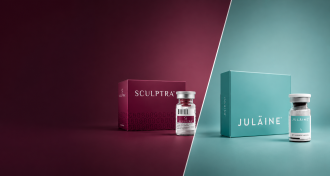
If you are looking for a natural, long-lasting way to restore firmness and soften lines without the obvious look of fillers. However, you may be weighing up Julaine vs Sculptra. In addition, both are collagen stimulators. However, both work with your own skin rather than simply adding volume on the day.
Interestingly, the two treatments share the same active ingredient, which is why patients so often compare them. As a result, this MediZen guide explains how Julaine and Sculptra work, where they differ. However, what they cost and how to decide between them.
What Is Julaine?
For example, julaine is an injectable collagen stimulator rather than a traditional filler. Importantly, it uses poly-L-lactic acid, or PLLA, microspheres, a material with a long, safe history in medicine. Also, once injected into the skin, the microspheres gently prompt your own fibroblasts to produce more collagen. In addition, rebuilding structure and firmness from within. Instead of adding instant volume, Julaine works gradually. As a result, your skin looks as though it is rejuvenating itself naturally over time. That said, at MediZen we most often use it to soften the nasolabial folds. What is more, the lines that run from the nose to the corners of the mouth. On top of this, most patients have a course of three treatments. Of course, spaced four to six weeks apart, with results building over the following months and lasting well.
What Is Sculptra?
In short, Sculptra is one of the most established collagen-stimulating injectables in aesthetics. Like Julaine, it uses poly-L-lactic acid. It works in the same fundamental way, by prompting your skin to produce its own collagen gradually over time. Sculptra has a long track record over many years and is well known for restoring lost volume and firmness across larger areas of the face. Such as the cheeks and temples, as well as softening folds. It is also delivered as a course of treatments, with results that build over several months and can last up to around two years. Because it shares the same active ingredient as Julaine, the two are very natural to compare.
Julaine vs Sculptra: How They Work
Both treatments rely on poly-L-lactic acid to stimulate collagen, so the underlying science is very similar. The body absorbs the microspheres gradually. As they break down they signal your fibroblasts to rebuild collagen, firming and supporting the skin from within. With both, the result is progressive and natural rather than instant. This is exactly what appeals to patients who want to avoid an overfilled appearance. The main practical differences come down to how each product is formulated and what it typically treats.
Julaine vs Sculptra: Key Differences
| Feature | Julaine | Sculptra |
|---|---|---|
| Type | PLLA collagen stimulator | PLLA collagen stimulator |
| Main ingredient | Poly-L-lactic acid microspheres | Poly-L-lactic acid |
| How it works | Stimulates your own collagen, gradually | Stimulates your own collagen, gradually |
| Often used for | Softening nasolabial folds | Volume loss, cheeks, temples and folds |
| Sessions | Course of 3, 4–6 weeks apart | A course of sessions, weeks apart |
| Results | Build over months, long-lasting | Build over months, up to ~2 years |
| Downtime | Minimal, same-day | Minimal |
Which Should You Choose?
Because Julaine and Sculptra are so closely related. The right choice usually depends on your specific concern and what your practitioner recommends after assessing your face. Sculptra is often chosen where the priority is restoring volume and firmness across larger areas such as the cheeks. Julaine, meanwhile, frequently targets the nasolabial folds with a gradual, collagen-led improvement. Neither is simply better than the other, and both deliver the natural, progressive results PLLA delivers.
This is exactly why a consultation matters. A qualified practitioner can assess your skin, explain which product suits your goals and design a realistic plan. Rather than applying the same treatment to everyone. There is never any pressure to proceed.
Can You Combine Julaine and Sculptra?
In most cases, you would choose one PLLA collagen stimulator rather than using both at once, since they do a very similar job. However, either combines well with other treatments as part of a wider plan, for example with skin boosters for hydration or with anti-wrinkle injections for expression lines. Your practitioner will advise on the right combination and sequence for you.
What to Expect From Your Treatment
Your treatment always begins with a full consultation, where we assess your skin. Discuss your goals and confirm the treatment is right for you. The treatment itself is quick and comfortable, and most patients return to their normal day straight away. Some mild swelling, redness or small bumps at the injection sites are normal. These usually settle within a few days. Because the results build gradually. We will give you a realistic timeline so you know exactly what to expect at each stage of your course.
Are Julaine and Sculptra Safe?
Both Julaine and Sculptra are well-established, regulated treatments. Poly-L-lactic acid has a long, safe history in medicine. As with any injectable, safety comes down to who treats you. At MediZen, a qualified doctor or nurse practitioner carries out every treatment after a full consultation and assessment. As a result, your treatment is both effective and safe.
We will always talk you through what to expect. This includes the normal side effects and how we manage them, before you decide to go ahead. If you ever have a question during your course, our medical team is on hand to help.
Why the Results Look Natural
One of the main reasons patients choose collagen stimulation is that the results look so natural. Rather than changing your appearance overnight, the improvement appears gradually as your own collagen rebuilds. As a result, friends and family tend to notice that you look well rather than that you have had something done. This subtle, progressive approach suits anyone who wants to look refreshed rather than overfilled. It is exactly the philosophy we follow at MediZen.
Julaine and Sculptra at MediZen
MediZen is a CQC-registered, Save Face-accredited medical aesthetic clinic in Sutton Coldfield, just a short drive from Birmingham. A qualified doctor or nurse practitioner performs every treatment, never a beautician. Dr David Eccleston founded the clinic in 1999. The Times has named him one of the UK’s best anti-ageing doctors. He now leads a team with more than 30 years of combined experience, all focused on safe, natural-looking results.
At MediZen, Julaine starts from £999 per treatment, or £2,750 for the recommended course of three. You will always receive a clear, personalised quote at your consultation, with no pressure to proceed.
If you would like a natural, long-lasting boost in collagen. Book a consultation with our medical team today and we will recommend whether Julaine or Sculptra is the better fit for your skin. To find out more about julaine vs sculptra, book a consultation with our Birmingham team.
Frequently Asked Questions
They are not the same product, but they are very closely related. Both use poly-L-lactic acid and both stimulate your own collagen gradually. They differ in their formulation and in the areas they are most often used to treat.
No. Julaine is a collagen stimulator, not a traditional dermal filler. Rather than adding instant volume, it prompts your skin to rebuild its own collagen over time for a natural, progressive result.
Both deliver long-lasting results because they rebuild your own collagen. Sculptra results can last up to around two years. Julaine results are also designed to be progressive and long-lasting. Your practitioner will give you a realistic timeline at your consultation.
At MediZen, Julaine starts from £999 per treatment, or £2,750 for the recommended course of three. You will receive a personalised quote at your consultation.
That depends on your concern, your skin and your goals. The best way to find out is a consultation, where we can assess your face and recommend the most suitable option.
 Back
Back