


You lean towards the bathroom mirror under the bright light first thing, and the shadow is already there. It is bluish rather than brown and sits in the same crescent every morning. By mid-afternoon your concealer has settled into the fine lines across it. Pinch the skin there gently and it feels almost as thin as tissue paper. Polynucleotides for under eyes at MediZen in Sutton Coldfield are designed for exactly that skin, because a thicker curtain shows less of what lies behind it.
| Performed by | Appointment | Downtime | Results | Price from |
|---|---|---|---|---|
| Dr David Eccleston or a doctor or nurse prescriber he has trained | Around 30 minutes, numbing cream on request | Small raised marks that settle in a day or so | Fresher after the first session or two, fuller result about six weeks after the last | £400 a session, or £1,440 for a course of four |
The treatment uses purified DNA fragments from salmon, set in very shallow injections into the skin beneath the eye. Dr David Eccleston uses them on this area more than any other, because the skin is too thin and too delicate for much else. He or a doctor or nurse prescriber he has trained carries out every treatment, after a face-to-face medical assessment.
The clever part is that nothing is added to the hollow. The fragments prompt the cells beneath the surface to lay down fresh collagen and hold more water, so the curtain itself grows thicker. Your injector books a short course with gaps of three to four weeks. The shadow often begins to ease after the first or second visit.
Why the Skin Under Your Eyes Shows What Lies Beneath
Under-eye skin is the thinnest on your face. It has fewer oil glands than the cheek and very little padding of its own. It also moves every time you blink, smile or squint. Behind it sits a fine network of blood vessels and the muscle that circles the eye. In your twenties the skin is thick enough to soften their colour. Later, it stops hiding them so well.
That is why so many dark circles are really a question of thickness. As collagen thins with the years, the curtain turns sheer, and the bluish and purple tones behind it start to show. The same thinning creases the surface into fine, crepey lines, which catch concealer and cast their own small shadows. Together they make a face read as tired, however well you slept.
None of it means your routine has failed. Eye creams work at the surface, and the change is happening in the layer beneath, where the collagen sits. Sun you caught years ago, rubbing tired eyes and the face your family handed down all play a part. What helps is something that works inside the curtain itself rather than on top of it.
The evidence for this approach is growing. A 2026 study in the Journal of Cosmetic Dermatology followed 42 people who had polynucleotides injected into the skin under their eyes. Their own ratings of the lower eyelid and crow’s feet improved at one, three and six months. Satisfaction peaked at three months, after two sessions.
How Polynucleotides Thicken the Curtain
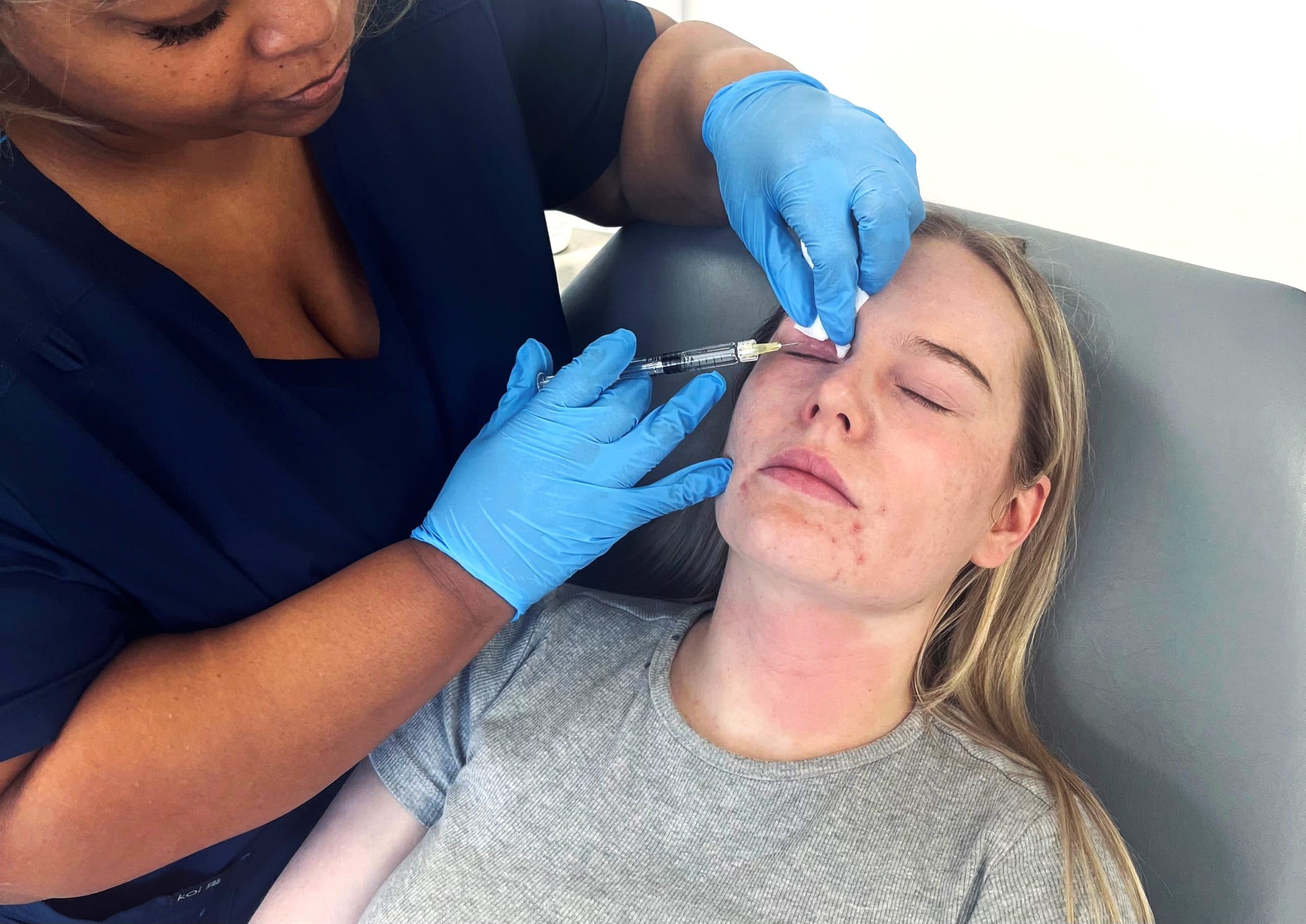
The appointment starts with clean skin and, if you would like it, numbing cream. The product carries no anaesthetic of its own, and each point feels like a light sting rather than a deep ache. Your injector works in a neat line of tiny, superficial deposits beneath each eye. The whole session takes about half an hour, most of it spent on the checks and photographs either side.
Each deposit raises a small bleb, a little like a bee sting. That shows the product is sitting high in the skin where it belongs. These settle within a day or so. Underneath, the work has only begun. The fragments draw water into the tissue and signal the fibroblasts, the skin’s repair cells, to step up collagen and elastin production again.
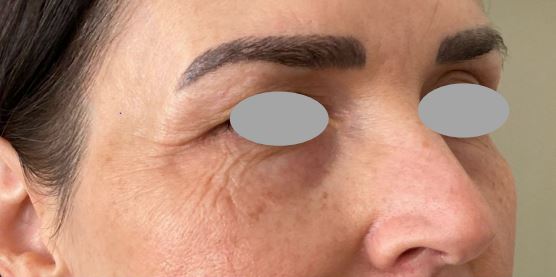
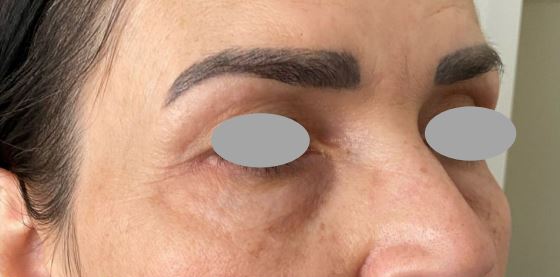
Over the following weeks the curtain grows denser. Fine lines soften as the surface smooths and firms, and the skin reflects light more evenly. Because the layer is thicker, less of the bluish colour underneath shows through. The change is gradual, so it reads as rest rather than treatment. Nobody can point to what was done, only to how much brighter you look.
A Plan for the Eye Area, Set by Your Injector
Not every dark circle is a thin curtain, and the consultation is where that gets sorted out. Polynucleotides answer shadows that come from sheer, crepey skin and a dull surface. They do much less where the shadow comes from a deep hollow in the tear trough. Where volume has gone, dermal fillers are the better tool, and your injector will say so plainly. A 2026 review in the Journal of Clinical Medicine compared the two for the eye area. Filler stayed ahead for rebuilding structure, while polynucleotides consistently improved elasticity, hydration and fine lines.
The fragments build the skin from within, so the face you see afterwards is still entirely your own.
Pigment sitting deep in the skin and puffy bags from fat pads are two more shadows this treatment leaves alone. Where the skin is thin and the hollow is also deep, some faces do well with polynucleotides first and a small amount of filler later. The fragments build the skin from within, so the face you see afterwards is still entirely your own.
Crepey under-eye skin often pairs well with careful microneedling, which works on texture with a pen set shallow for the eye area. If the lines are mainly creases that appear when you smile, our guide to treatments for under-eye wrinkles explains which route matches which line. Your injector decides the order and the spacing, so one treatment never undoes another.
From the First Session to the Fuller Result
The day itself asks very little of you. The blebs settle quickly, and any pinkness, swelling or a small bruise fades soon after, as with any injectable. Plenty of people head straight back to their desk. Keep make-up off for the rest of the day, while heavy exercise, saunas and active skincare such as retinol wait for around forty-eight hours. Try not to press or massage the area while it settles.
The shadow tends to lift in stages. A brighter, less creased surface often appears after the first or second session, and every visit builds on the collagen the previous one started. Leaving three to four weeks between them gives that collagen time to form. The full effect needs around six weeks beyond the final session, once the new fibres have settled into the curtain.
Under-eye skin keeps ageing, so the curtain will thin again over time. Left alone, the result can last up to a year. One maintenance visit about twice a year keeps the layer thick, and it is a short appointment that fits easily into a lunch break.
Where Your Under-Eye Plan Starts
Your first appointment is a consultation with a doctor or nurse prescriber. We look at the shadow in good light and from more than one angle, because a hollow and a thin curtain behave differently as you tilt your head. We take your medical history and talk through what bothers you most. You leave knowing whether polynucleotides suit your eyes, and what the plan and price will be.
Prices start at £400 for one session, with a four-session course at £1,440. Every figure is on our pricing page, and the polynucleotides treatment page explains how the course is spaced and what to do before you come in. If you are new to the treatment, our guide to what polynucleotides are starts from the beginning.
You will find MediZen above the shops at Astor House, easy to reach from Little Aston, Walmley and Erdington. If the shadow under your eyes has started to arrive before you do, come and let our injectors look at it properly. They will tell you how much of it is a thin curtain, and how polynucleotides under the eyes can thicken it.
Questions About Polynucleotides Under the Eyes
The under-eye area raises its own questions, mostly about shadows, filler and how soon anything shows. Bring the rest to your consultation and our injectors will answer them in the room.
For thin, crepey under-eye skin they work very well, and it is the treatment’s strongest use. The fragments prompt fresh collagen and better hydration, so the skin thickens and smooths and less shadow shows through. They do not add volume, so a deep hollow is better suited to filler.
They improve the kind of dark circle that comes from thin skin and a tired surface, because a thicker layer lets less colour through. They do less for shadows caused purely by a hollow tear trough or by pigment deep in the skin. Your injector looks at what is causing your circles before suggesting polynucleotides or another route.
Plan on three or four appointments for the first course, with three to four weeks between them. The shadow often begins to ease after the first or second visit. Once the course is done, a maintenance session about every six months keeps the skin thick. Your injector confirms the plan once they have seen your under-eye skin.
They answer different problems. Polynucleotides improve the quality of thin, crepey skin, and filler restores volume where the tear trough has hollowed. Many people suit polynucleotides alone, some need filler, and a few benefit from both in sequence. Your injector works out which layer is behind your shadow before suggesting either one.
Each injection point raises a small bleb, a little like a bee sting, and these settle within a day or so. Mild pinkness, swelling or a small bruise can follow, as with any injectable. Work can carry on as normal. Make-up waits until the next day, and saunas and active skincare for about forty-eight hours.
Many people notice a brighter, smoother surface after the first or second session. The change keeps building as new collagen forms, and it reaches its fullest about six weeks after your final treatment. Because it arrives gradually, people around you notice that you look less tired without spotting a treatment.
Crepey texture is one of the clearest wins for this treatment. As fresh collagen builds, thin, papery skin firms up and the fine crinkles soften. The surface also holds water better, which helps concealer sit smoothly instead of settling into lines. Some people pair the course with gentle microneedling for extra texture work.
Under-eye polynucleotides at MediZen start from £400 a session, and four sessions booked as a course cost £1,440. Your injector confirms the number of visits and the total once they have examined the skin beneath your eyes. You will know the whole cost before anything is booked.
Thicken the Curtain Under Your Eyes
If the shadow under your eyes makes you look more tired than you are, book a polynucleotides consultation in Mere Green. Ring MediZen on 0121 308 4373 and mention the eye area, or message the team via WhatsApp.
 Back