


You come in from a January car park and unwind your scarf in the hallway. The mirror by the door catches your face, cheeks stung pink by the wind. The fine red web beside your nose stands out as if someone had traced it in ink, and in August you barely noticed it. Thread vein treatment in winter at MediZen in Sutton Coldfield starts from that moment. The season that shows you every vessel is also the one that hides the healing.
| Performed by | Appointment | Downtime | Results | Price from |
|---|---|---|---|---|
| Laura Gallagher and the MediZen aesthetician team, under the clinical oversight of Dr David Eccleston | Most sessions under 10 minutes, up to 30 for larger areas | Minimal, make-up and normal plans the same day for most people | Smaller vessels often clear in the session, larger veins fade over 2 to 6 weeks | £145 single facial vessels, £240 leg veins |
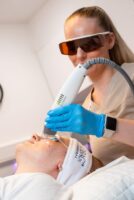
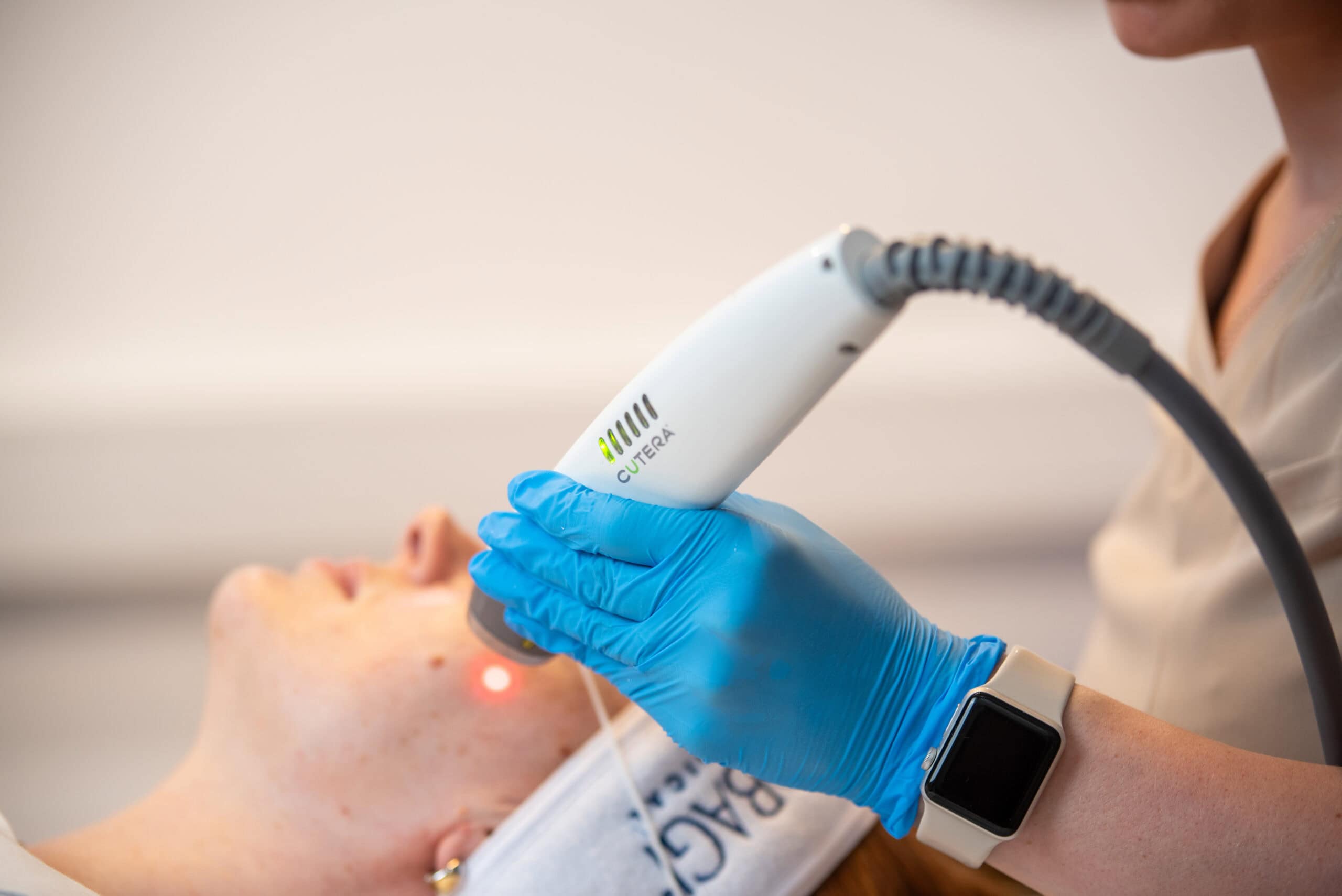
The laser we use is the Cutera excel V+, a vascular laser with two wavelengths in one platform. Laura Gallagher leads the aestheticians who carry it out at MediZen, and our clinical director, Dr David Eccleston, keeps oversight of every laser course. A cooled tip rests on the skin through each pulse. Most sessions are finished in under ten minutes, short enough to fit before work on a dark December morning.
The clever part is a rule that summer makes hard and winter makes easy. For four weeks before each excel V+ session, sunshine, sunbeds and fake tan are off the menu. In July that asks real discipline, with holidays and long evenings pulling the other way. In November it asks nothing at all, because the weather has already kept your skin covered and pale for weeks.
Why Winter Brings Every Thread to the Surface
Thread veins are tiny vessels that have widened and stopped closing fully, just under the thinnest skin of the face. Cold air narrows them, and warm air opens them again. A winter day asks them to make that swing a dozen times. You walk from a frosty pavement into a heated shop, then back out to the car and into a warm kitchen. Each change pushes a little more colour into vessels that have lost their spring.
The pattern shows up clearly in what people with sensitive skin report. In a survey by the US National Rosacea Society, wind was named by 88 percent of 683 respondents as a seasonal trigger, a figure that includes people living in mild climates. The same piece notes that overheated rooms and dry indoor air irritate reactive skin too. A British winter serves up exactly that mix.
None of this means your skin is doing anything wrong. The tendency to thread veins is largely inherited, and years of sunlight have quietly weakened the walls of those small vessels. Winter simply turns the lights up on them. That is why so many people first ask about their veins once the clocks go back. Our thread veins guide explains every cause in turn.
The useful thing about a season that shows you everything is that it shows your practitioner everything too. Faint threads that hide under a light tan in summer stand out clearly in December. Your face draws its own map of the vessels worth treating, and the consultation reads it. Nothing is guessed at, and the first session can go straight to the threads that bother you most.
Pale Skin Lets the Laser See the Vessel
The excel V+ works because its light is fussy about what it heats. The green 532 nm wavelength is absorbed by the haemoglobin inside a shallow vessel. The vessel warms, seals and is cleared away by your body over the following weeks. Pigment from a tan also takes up some of that green light. Every bit it absorbs is light that never reaches the vessel.
Pale winter skin removes that competition. The light passes cleanly through the surface to the red target, with less warmth spread into the skin around it. The deeper 1064 nm wavelength reaches larger vessels and largely ignores melanin, so it suits leg veins and a wider range of skin tones. Your practitioner chooses between the two for each vessel, and sets the spot size and energy to match.
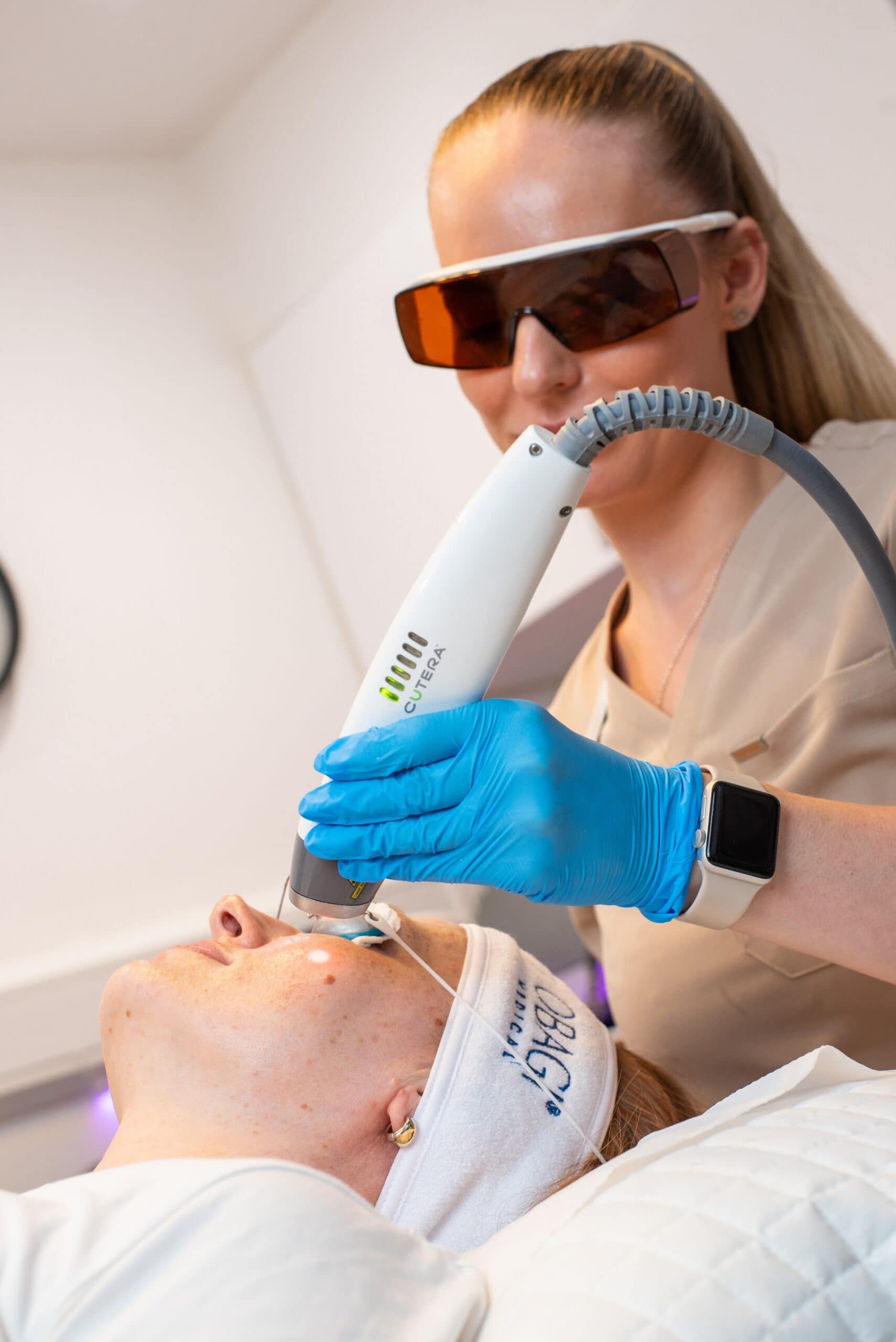
In September 2026 a team at the University of California, Irvine published a split-site study of the same two wavelengths. They compared the 532 and 1064 nm pairing with a 595 nm pulsed dye laser on twenty-five people with vascular conditions, rosacea among them. Both lasers worked well. Patients reported noticeably less pain, redness and bruising after the dual-wavelength treatment. Most people leave an excel V+ session looking pink rather than marked.
Your face draws its own map of the vessels worth treating, and the consultation reads it.
The pulses themselves feel like quick, warm snaps against the cheek, eased by the chill of the handpiece. Nothing is numbed and nothing is cut. Smaller facial threads often vanish before you sit up. You walk back out into the cold with your scarf pulled high, and nobody on the way home can tell where you have been.
A Winter Plan for Faces and Legs
Most winter plans start with the face, because that is where the season shows the most. A handful of sharp red lines by the nostril answer to the vascular laser by itself. Where a soft pink sits behind them, Laser Genesis gently warms the skin to calm it and build fresh collagen. Bolted onto a vein appointment it is £99 more, so the threads and the background clear side by side.
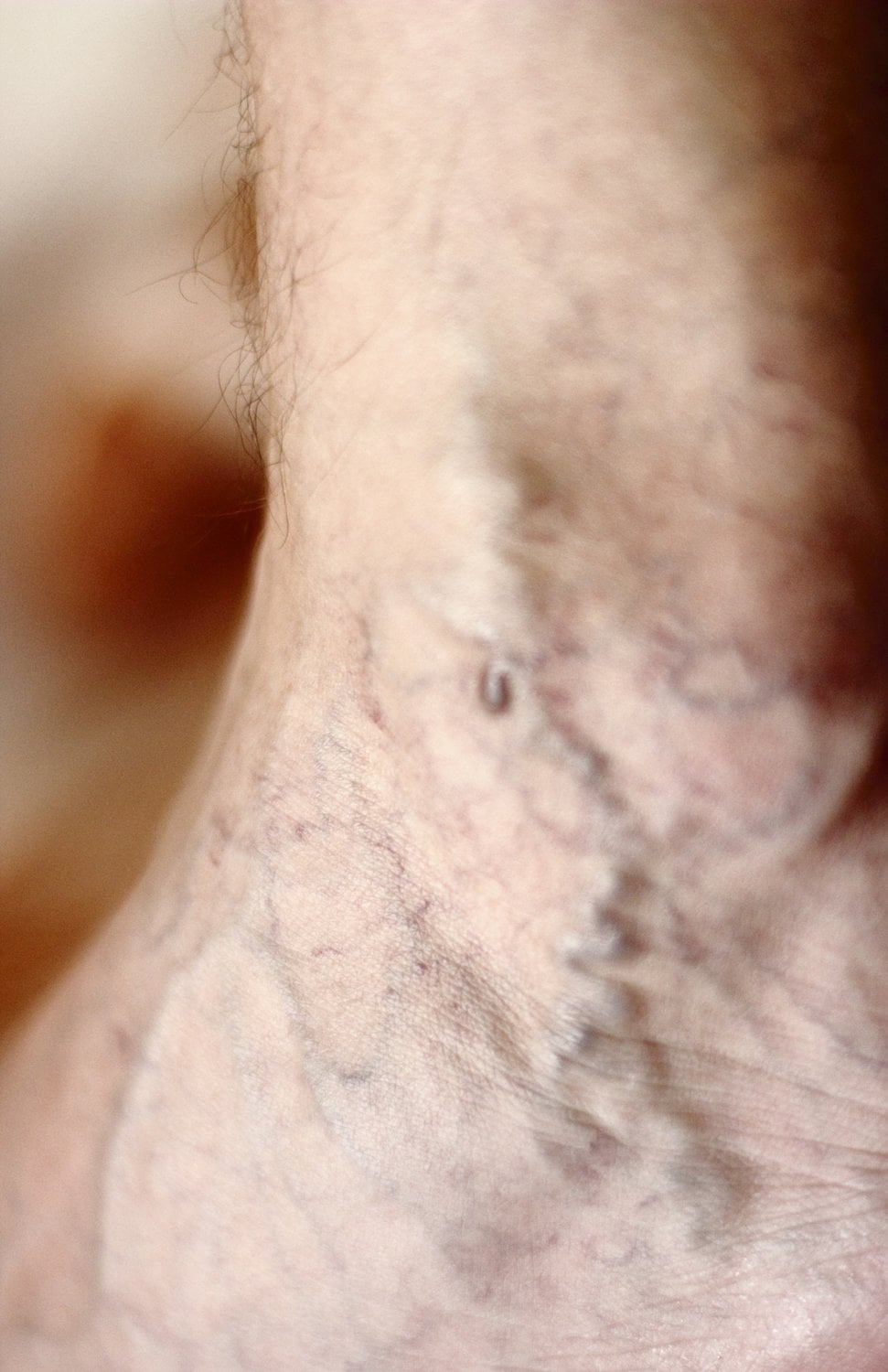
Legs are the quiet winner of the season. Blue and red webs on the thighs, behind the knees and around the ankles take the deeper 1064 nm wavelength. Larger leg vessels darken first and then fade gradually as your body clears them. In winter that in-between stage happens under trousers, boots and opaque tights. Nobody sees it except you, and the skirts come out in spring with nothing to hide.
Occasionally one stubborn facial thread outlasts its neighbours. Advanced electrolysis closes that last one through a fine probe, using a small pulse of heat. Bulging, raised leg veins belong to a separate conversation from thread veins, and your practitioner tells you clearly where they fit when you first meet. You leave with a winter timetable that lists which veins come first.
Healing Under Scarves, Clear Skin by Spring
Treated skin carries a gentle flush through the afternoon, and a wider patch can take a day or two. Foundation can normally go on again straight away, and the working week carries on. Larger veins turn a shade darker first. Over the next two to six weeks they fade, behind a high collar and a warm scarf rather than in the glare of a summer afternoon.
Facial thread veins usually need one to three sessions. Our gallery includes a leg that cleared straight after one excel V+ treatment, though most legs settle over a short course. A first session in November or December leaves room for the rest to follow over the winter. By the first bright days of March, the threads the wind used to pick out have gone.
Spring light then shows what the cold months did. Cheeks look more even in photographs, and the first warm afternoon outdoors shows calm skin where the wind once drew red lines. The vessels that were sealed stay sealed. Your skin keeps the tendency that made them, though, so a daily broad-spectrum SPF from March onwards protects that clarity through the bright months ahead.
Where Your Winter Vein Plan Starts
Everything begins with a conversation in Mere Green, under good, clear light. Your practitioner asks about sun habits, skincare and whatever makes you flush, then studies the map the cold has drawn across your face or legs. A small test patch confirms how your skin reacts. You go home with a course built around the darker months and a price for it.
Single facial vessels start at £145, or £415 as a course of three. A small facial area costs from £185, the full face £235, and leg veins £240, or £685 for three sessions. Every figure sits on the MediZen price list. You can browse results for faces and legs on the excel V+ laser page before you come in.
Before each session you set aside retinols and acids for a few days. The four weeks away from the sun take care of themselves at this time of year. Aftercare notes reach your inbox with the booking, and the MediZen team answers any questions you have once you are home. The darker months make every part of that routine easier to keep.
People come to us from Walmley, Little Aston and Tamworth, often fitting a short session around the school run. If the wind has been tracing the threads on your cheeks each morning, this is a very good moment to start. A winter course of excel V+ treatment does its quiet work under the scarf. The face that greets you in spring will be clearer for it.
Winter Vein Questions, Answered Before You Book
The colder months bring their own questions about timing, sun and recovery. Here are the answers people in Sutton Coldfield most often want before they start a winter course of vascular laser.
Yes, a very good one. MediZen asks you to keep the treatment area free of sun, sunbeds and self-tan for four weeks before an excel V+ session, and that is effortless when it is dark by five. Pale skin lets the laser light reach the vessel cleanly, and the weak sun makes protection afterwards simple, so the result settles calmly before spring.
Cold wind narrows the small vessels in your face, and warm indoor air opens them again, so a day spent moving between the two makes them work hard. Vessels that have already lost their spring stay a little wider after every swing. In a large National Rosacea Society survey, wind was the seasonal trigger people named most often.
Late autumn or early winter gives the most comfortable runway. Smaller facial vessels often disappear on the day, and larger veins fade over two to six weeks after each session. Starting in November or December leaves room for a short course to finish before March, with time for everything to settle before the brighter weather arrives.
Winter is a lovely time for legs. Larger leg veins darken a little before they fade, and that stage stays hidden under trousers and tights. The deeper 1064 nm wavelength of the excel V+ reaches the larger blue vessels found on the legs. Leg vein treatment at MediZen starts from £240, with a course of three from £685.
Sun protection is the one firm rule afterwards. Your aftercare guidance arrives by email when you book, and a daily broad-spectrum SPF protects both the treated skin and the result. In winter that is easy, because the sun sits low and your face spends most of the day indoors, and the habit then carries you through spring.
Most people look a little pink, with mild swelling that settles within hours or a few days, and many put make-up straight back on. A 2026 study comparing the excel V+ wavelength pairing with a pulsed dye laser found patients reported less pain, redness and bruising with the dual-wavelength system. Larger veins darken briefly before they fade, which is a normal part of clearing.
No, the prices stay the same all year. Single facial vessels start from £145, or £415 for three sessions, a small facial area from £185 and a full face from £235. Leg veins start from £240. The final number is agreed face to face, after your vessels have been looked at.
Yes, and the colder months suit the pairing well. Laser Genesis gently warms the skin to calm diffuse redness and build collagen, with no downtime. At £99 on top of a vein session, it lets one appointment deal with both the single threads and the wider flush. Your practitioner sets the order once they have seen your skin.
Start This Winter, See It in Spring
Book a winter consultation at MediZen in Mere Green and plan an excel V+ course that finishes before the brighter weather, under the clinical leadership of Dr David Eccleston. Give us a ring on 0121 308 4373, or contact the clinic through WhatsApp, and choose your first date.
 Back