

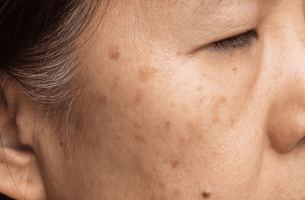
Learning how to get rid of pigmentation on your face starts with understanding what you are actually looking at, because the right approach depends entirely on the type of pigment sitting in your skin. At MediZen, our doctor-led team in Sutton Coldfield has helped patients across the Midlands fade sun spots, age spots, freckles and melasma since 1999, and the honest truth is that some marks respond beautifully to home care while others need a clinical hand. This guide walks you through both, so you can spend your time and money on what genuinely works. If you want a full overview of your options, our pigmentation treatment hub brings everything together in one place.
What facial pigmentation actually is
Pigmentation appears when melanin, the natural pigment that gives skin its colour, gathers unevenly in certain areas. The most common types we see are sun spots and age spots, which are flat brown patches from years of daylight exposure, along with freckles, post-inflammatory marks left behind after spots or acne, and melasma, a hormonal pattern that tends to sit symmetrically across the cheeks, forehead and upper lip. They can look similar in the mirror, but they behave very differently, which is why a quick diagnosis matters so much before you start treating anything.
At-home steps that genuinely help
Daily SPF is the foundation
If you do nothing else, wear a broad-spectrum SPF 30 or 50 every single day, all year round. Ultraviolet light is the single biggest driver of facial pigmentation, and it will darken existing marks and undo any treatment you invest in. Sunscreen is not the exciting part of a routine, but it is the one step that both prevents new pigment and protects the results of everything else you do.
Vitamin C and niacinamide
A vitamin C serum in the morning helps to brighten the skin and interrupt excess melanin production, while niacinamide calms inflammation and can gently even out tone over time. Used together under sunscreen, they are a sensible, low-risk pairing for mild, surface-level unevenness. Expect subtle improvement rather than dramatic change.
Retinoids and prescription brighteners
Retinoids speed up cell turnover, helping pigmented cells move up and off the skin more quickly. Prescription brighteners can go further still and are best used under medical guidance, because the stronger formulas need careful dosing. This is where medical-grade products earn their place. Our medical-grade skincare is prescribed to your skin type and concern rather than bought off a shelf, which makes a real difference to both safety and results.
The limits of doing it yourself
Home care is excellent for prevention and for gently improving mild pigment, but it has real limits. Stubborn, deeply set sun spots often plateau no matter how diligent you are, and melasma in particular can flare or darken if you push too hard with active ingredients. If you have been consistent for three to four months and stubborn patches have barely shifted, that is your signal that in-clinic treatment will do more.
When you need in-clinic treatment
Laser for sun spots, age spots and freckles
For well-defined sun spots, age spots and freckles, laser is often the most effective option. At MediZen we use the excel V+ laser, a Cutera 532 and 1064nm system that targets the pigment precisely and is also excellent for redness and small facial veins. Treated spots typically darken briefly, a little like coffee grounds, then flake away over a week or two to reveal clearer skin underneath. Most people need a short course rather than a single session.
Peels for surface pigment and post-acne marks
Chemical peels lift the outer layers of skin to fade surface pigment and post-inflammatory marks, the brown or pink shadows that linger after a breakout has healed. They also brighten dull, uneven tone and can be tailored in strength to suit sensitive skin. Our chemical peels are a strong choice when your main concern is patchy tone or marks left by past acne rather than isolated brown spots.
Gentle toning for melasma
Melasma deserves a word of caution. Because it is driven by hormones and heat as well as light, aggressive laser can actually make it worse. The safer route is a gentle approach: laser toning combined with the right skincare, kept deliberately low and slow. Our Xeo+ laser can be used for careful toning, and paired with daily SPF and prescribed brighteners it helps to soften melasma without provoking a rebound. Managing melasma is about long-term control rather than a one-off cure, and we will always be honest with you about that.
A realistic timeline
Managing your expectations helps you stay the course. Home care needs three to four months of consistent use before you can fairly judge it. Laser treatment for sun spots often shows visible clearing within one to two weeks of each session, with a typical plan running across a few sessions spaced a few weeks apart. Peels build gradually over a course. Melasma is the slowest of all and is best thought of as ongoing management measured in months, not days. Across every route, the results hold far better when daily sun protection is part of your life.
How to stop pigmentation coming back
Fading pigment is only half the job. To keep your skin clear over the long term, you will want to:
- Wear broad-spectrum SPF every day and reapply when you are outdoors for long spells.
- Add a hat and shade during the brightest months, especially if you are prone to melasma.
- Keep a vitamin C or brightening serum in your routine as gentle maintenance.
- Treat new spots and breakouts promptly to reduce the marks they leave behind.
- Book a review if old patches start to return, so we can adjust your plan early.
Pigmentation is rarely a one-and-done fix, and no honest clinic will promise it is gone for good. With the right combination of home care and, where needed, targeted in-clinic treatment, most people achieve clearer, more even skin they can maintain over time. If you would like a professional diagnosis and a plan built around your skin, our pigmentation treatment team in Birmingham is here to help.
Frequently asked questions
Can you get rid of pigmentation on your face permanently?
You can fade most pigmentation significantly and keep it under control, but no treatment is truly permanent, because new pigment can always form with sun exposure or hormonal changes. Daily SPF and occasional maintenance are what keep your results looking their best.
How long does it take to see results?
Home care typically needs three to four months to show its full effect. Laser treatment for sun spots can show visible clearing within one to two weeks of a session, while peels and melasma toning build gradually over a course of treatments.
Is laser safe for all types of facial pigmentation?
Laser is excellent for defined sun spots, age spots and freckles, but it is not right for everything. Melasma in particular needs a gentle toning approach rather than aggressive laser, which is why a proper diagnosis at consultation always comes first.
Will pigmentation come back after treatment?
It can, especially without sun protection. Wearing daily SPF, using a brightening serum and booking occasional reviews all help to keep pigment from returning. Melasma is the most likely to recur and is managed rather than cured.
Do I need to see a doctor, or can I just use skincare?
Mild, surface pigment often responds well to good skincare alone. If stubborn patches have not shifted after a few months, or if you are unsure whether you are dealing with sun damage or melasma, a doctor-led consultation will save you time and point you to the treatment most likely to work.
 Back
Back