

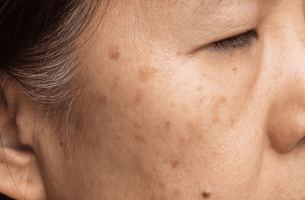
If you have ever searched for what is hyperpigmentation, you are probably looking at a patch of skin that seems darker than the area around it and wondering whether it will fade. Hyperpigmentation is the term for skin that has produced too much pigment in certain spots, and it is one of the most common concerns we see at our doctor-led clinic in Sutton Coldfield. The good news is that most forms respond well to the right treatment. This guide explains the main types, what causes each one and how we treat them, and you can explore your options on our pigmentation treatment hub.
What is hyperpigmentation?
Hyperpigmentation is an umbrella term for any darkening of the skin caused by excess melanin. Melanin is the natural pigment that gives your skin, hair and eyes their colour, and it is made by cells called melanocytes. When these cells overproduce, the extra pigment gathers in one area and shows up as a spot or patch that looks darker than your normal skin tone.
Hyperpigmentation is harmless in itself, but because it affects how even and clear your skin looks, many people choose to treat it. The key thing to understand is that it is not a single condition. There are several distinct types, each with its own trigger and its own best treatment, which is why a proper assessment matters so much.
The main types of hyperpigmentation
Sun spots and age spots
Sun spots, also called age spots or solar lentigines, are flat brown marks that appear on areas that catch the most daylight, such as the face, backs of the hands, chest and shoulders. They are caused by years of accumulated UV exposure, which pushes the skin to make more melanin in defence, and they tend to become more noticeable from our forties onwards. Sun spots have clearly defined edges and sit on the surface, which makes them one of the most treatable forms of pigmentation.
Freckles
Freckles are small, light-brown spots that are largely down to genetics and often become darker in summer when the sun is stronger. They are completely harmless, and many people are happy to keep them. If your freckles have merged or darkened in a way you would rather reduce, they can be treated, but this is always a personal choice rather than a medical need.
Melasma
Melasma appears as larger, symmetrical patches of brown or grey-brown pigment, usually across the cheeks, forehead, upper lip and bridge of the nose. It is closely linked to hormones, which is why it is common during pregnancy and in people taking the contraceptive pill, and it is often nicknamed the mask of pregnancy. Heat and sunlight make it worse. Melasma is the most stubborn type of pigmentation and needs to be handled gently, because aggressive laser can actually make it darker. It is best thought of as a condition to be managed and improved over time rather than removed in one go.
Post-inflammatory hyperpigmentation
Post-inflammatory hyperpigmentation, or PIH, is the flat brown or tan mark left behind after the skin has been inflamed. The usual culprits are spots and acne, but it can also follow a cut, a burn or a harsh cosmetic treatment. Unlike a true acne scar, PIH is a change in colour rather than texture, so the skin stays smooth to the touch. It is more common and often more persistent in medium to deeper skin tones. Because it sits in the upper layers of the skin, it usually responds well to gentle resurfacing and a good skincare routine. Pitted or indented acne scars, by contrast, are a separate texture problem that needs a different approach again.
How each type of hyperpigmentation is treated
Because the types differ, so do the treatments. Matching the right approach to the right type is the most important part of a good result, which is why we always begin with a consultation. Here is how we treat each one.
- Sun spots and age spots: These respond very well to our excel V+ laser, a Cutera 532nm and 1064nm system that targets the extra pigment and lifts it away over the days that follow, without disturbing the surrounding skin. It is also excellent for the redness and small visible veins that often show up on sun-damaged skin.
- Freckles: Where someone wants to soften them, the same excel V+ laser can lighten freckles effectively, alongside diligent daily sun protection to keep them from returning.
- Melasma: This calls for a gentle approach rather than a strong one. We use Xeo+ laser toning, which delivers low, controlled energy to break down pigment slowly, paired with targeted medical-grade skincare to keep it settled. Patience and consistency give the best long-term results here.
- Post-inflammatory hyperpigmentation: Post-acne marks and other PIH usually improve well with a course of chemical peels, which gently accelerate cell turnover, supported by brightening medical-grade skincare to even out tone.
In your consultation, our clinicians identify exactly which type of pigmentation you have before recommending anything. That step protects you from the wrong treatment, which matters most with melasma.
How to prevent hyperpigmentation
Whichever type you are dealing with, prevention comes back to one habit above all others: daily sun protection. Ultraviolet light is the biggest driver of new pigment and the main reason treated spots can come back, so wearing a broad-spectrum SPF every day, even when it is cloudy, is the most effective thing you can do for your skin, and it protects the results of any treatment you invest in.
Beyond SPF, a few simple habits help: reapply sunscreen through the day if you are outdoors, wear a hat, seek shade during the strongest hours, and avoid picking at spots, which is what leads to post-inflammatory marks. A medical-grade skincare routine chosen for your skin type keeps pigment in check and supports an even tone over time.
If you would like to know which type of pigmentation you have and the best way to treat it, our doctor-led team is here to help. Read more on our pigmentation treatment page or book a consultation for a personal plan.
Frequently asked questions
Is hyperpigmentation the same as an acne scar?
Not quite. The brown or tan marks left after spots are post-inflammatory hyperpigmentation, a change in colour, so the skin stays smooth. A true acne scar is a change in texture, such as a pitted area. Flat marks usually respond well to peels and skincare, while pitted scars need a different treatment aimed at rebuilding texture.
Can hyperpigmentation be removed permanently?
Many spots, such as sun spots and age spots, can be cleared very effectively, but no result is guaranteed to last forever. New pigment can form with more UV exposure, and hormonal types like melasma can return. This is why daily sun protection and a good skincare routine matter so much for keeping your results, rather than relying on treatment alone.
Why is melasma treated differently from other pigmentation?
Melasma is driven by hormones and heat and can be aggravated by strong treatment, so intense laser can make it darker rather than better. We take a gentle, gradual approach using laser toning and supportive skincare to improve it over time, managing it steadily rather than blasting it away in one session.
How many sessions will I need?
It depends on the type, the depth and how your skin responds. Sun spots often improve after a few laser sessions, while melasma and post-inflammatory marks usually need a longer, steadier course. Your clinician will give you a realistic idea once they have seen your skin in person.
Why should I choose a doctor-led clinic for pigmentation?
Pigmentation is one area where the wrong treatment can make things worse, particularly with melasma and in deeper skin tones. Our clinic has been established since 1999, is CQC-registered and is led by clinical director Dr David Eccleston, so your skin is assessed and treated by experienced medical professionals here in Sutton Coldfield. That means an accurate diagnosis first, then a plan matched to your specific type of pigmentation.
 Back
Back