


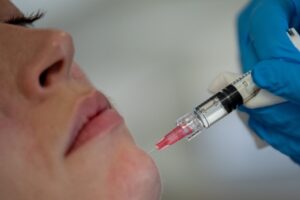
You catch your reflection in the lift mirror at the end of a long week, and the word that arrives is tired. Friends say the same thing, kindly, and an early night no longer fixes it. Tired skin comes in three kinds, though, and a mirror shows all three at once. At MediZen in Birmingham we offer a skin booster for each kind. The first job is working out which one you are looking at.
| Performed by | Appointment | Downtime | Results | Price from |
|---|---|---|---|---|
| A doctor or independent nurse prescriber, led by Dr David Eccleston | About 10 minutes for Profhilo, around 30 for polynucleotides or Julaine | Back to normal the same day | Builds over 4 weeks with Profhilo, about 6 weeks after a polynucleotides course, over months with Julaine | £385 Profhilo, £400 polynucleotides, £999 Julaine |
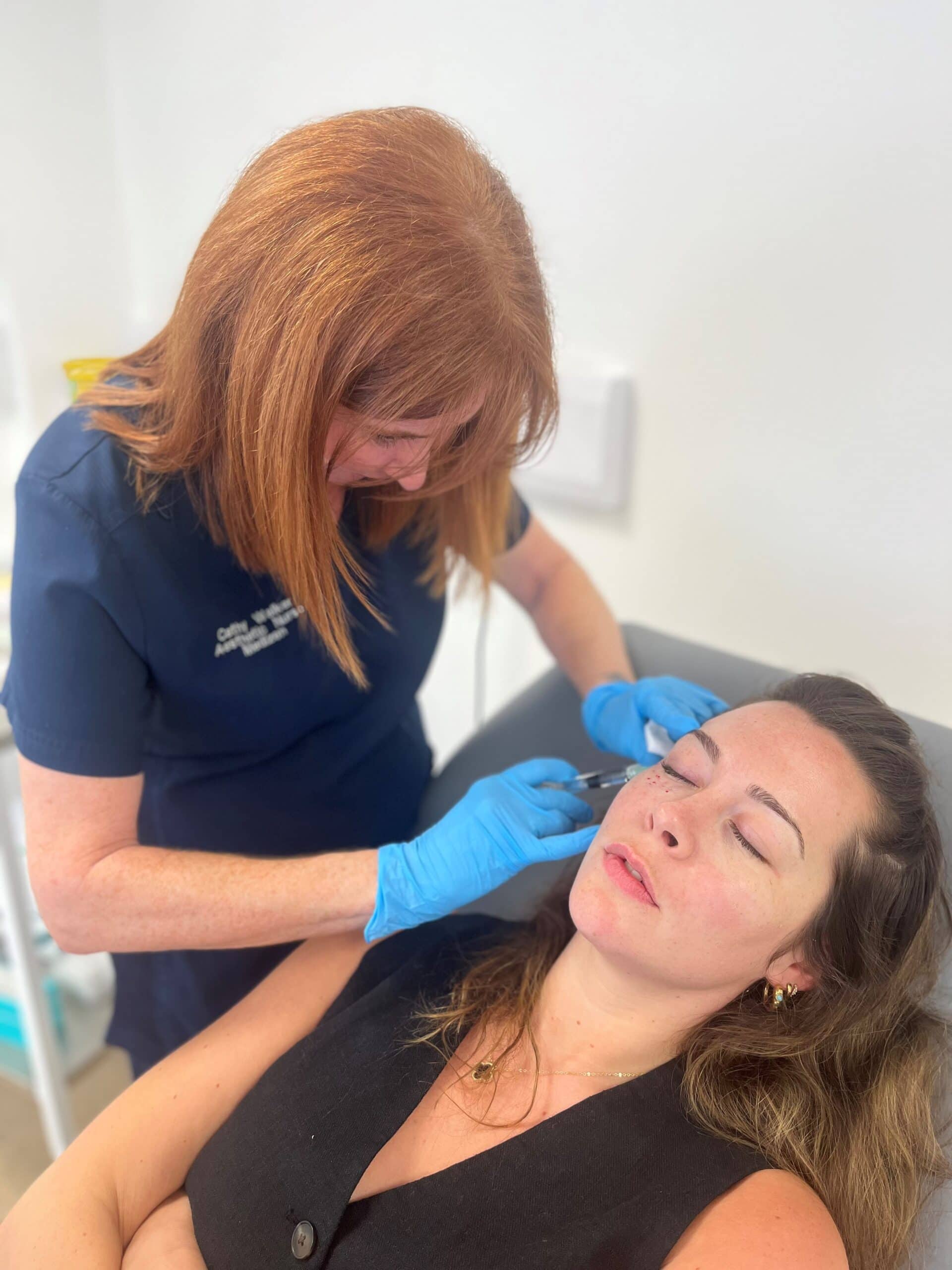
Profhilo, polynucleotides and Julaine are injectables that work on the quality of your skin rather than the shape of your face. Each is placed by a doctor or independent nurse prescriber, after a face-to-face medical assessment. Cathy Walker, an independent nurse prescriber, is our Profhilo specialist. Dr David Eccleston, our clinical director, uses polynucleotides most of all under the eyes. None of the three adds obvious volume, which is exactly why people who dread looking done are drawn to them.
The clever part is that each one answers a different kind of tired. Profhilo puts water back, polynucleotides prompt repair, and Julaine rebuilds the support underneath. Their clocks differ too. Profhilo builds its result over four weeks, while the collagen Julaine prompts keeps developing for months after the last of three sessions.
Three Kinds of Tired, and Why the Mirror Blurs Them
The first kind is dry. Skin that once bounced back from a late night now looks flat, and foundation settles into fine lines it used to skip. The surface has lost water and the glow that comes with it. You see it most in daylight, across the cheeks and forehead. It can arrive at almost any age, once skin starts holding less moisture than it did.
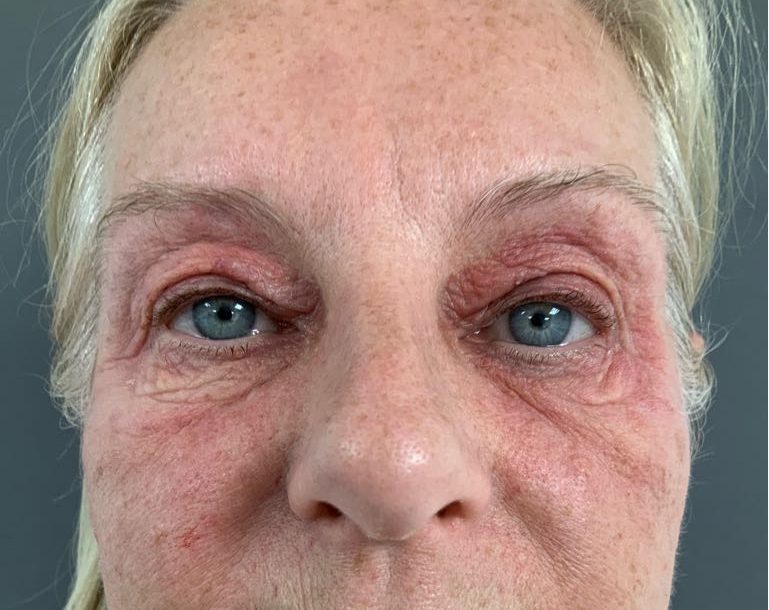
The second kind is thin. The skin under the eyes turns crepey and faintly shadowed, and the neck looks a step behind the face. The backs of the hands crinkle when you make a fist. Water is not the problem here. The fibroblasts, the cells that repair skin and build its collagen, have slowed down, and the skin has quietly thinned along with them.
The third kind is folded. The creases running from your nose to the corners of your mouth, the nasolabial folds, look deeper than they did five years ago. That is a loss of structure beneath the skin, because collagen production slows from our mid twenties onwards. No amount of sleep lifts a fold, since the scaffolding that held it smooth has thinned underneath.
None of this is a failure of your routine. Serums work on the surface, and all three kinds of tired begin below it. The mirror shows them together, so most people try one fix for all three. It answers part of the picture, and the rest stays tired. Naming your kind of tired is what turns the choice of booster from a gamble into a plan.
How Each Booster Answers Its Own Kind of Tired
Profhilo answers dry skin. It is made almost entirely of hyaluronic acid, the water-loving molecule your skin already uses to stay plump, and it is far runnier than a filler. From each injection point it spreads across roughly two centimetres, flooding the tissue with moisture. Over the next four weeks it prompts the skin to make collagen and elastin of its own. That second phase gives the result its staying power.
On the face it goes in at five mapped points on each side. A 2016 study of 64 women aged 38 to 60 used that same pattern, with two sessions four weeks apart. Their skin had improved measurably by week four or eight and was still significantly better at week sixteen. It also suits the neck, the décolletage and the backs of the hands, where dryness and thinning often travel together.
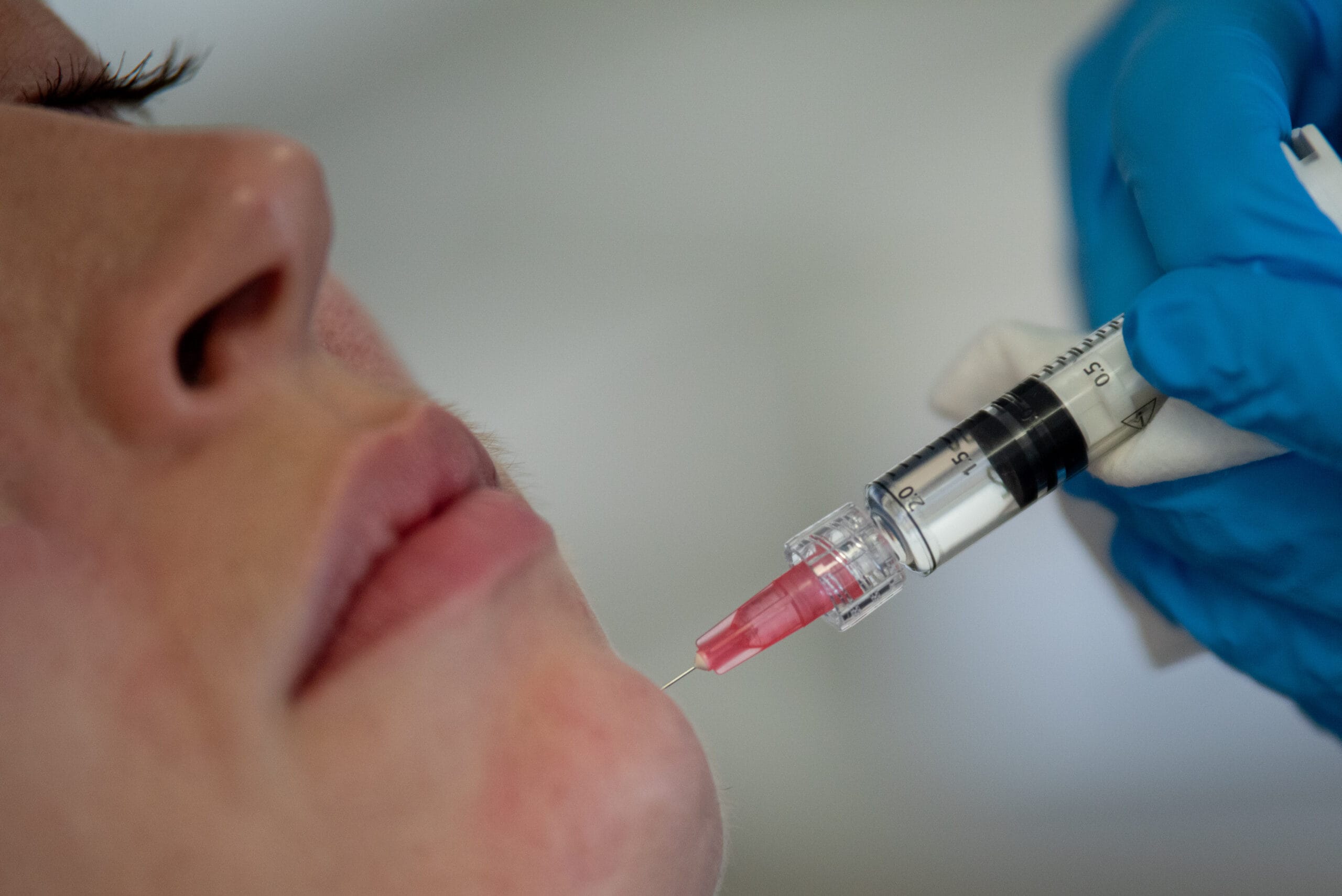
Polynucleotides answer thin skin. They are purified fragments of salmon DNA, which our skin accepts because it so closely resembles human DNA. Once placed, they work as a signal to those slowed fibroblasts. New collagen forms, the tissue mends and slowly thickens, and the shadow under the eyes softens. In July 2026 a systematic review of randomised trials in Cureus gathered seven controlled studies. It found gains in wrinkle measures, scar quality and patient satisfaction.
Julaine answers the fold. It is a collagen activator made from poly-L-lactic acid, known as PLLA, a material with more than 25 years in regenerative aesthetics. Nordberg Medical, the Swedish maker, shapes it into smooth microspheres that spread evenly rather than clumping. Placed in the dermis, the deeper living layer of the skin, they release lactic acid slowly. Your fibroblasts read that as a cue to rebuild the type I and type III collagen that gives skin its strength.
A Booster Plan Set by Your Clinician
Our clinicians tend to open the conversation by matching each kind of tired to its booster. The number of sessions differs for each, and so does the spacing, because each booster works on its own clock. Here is the usual starting point for each kind:
- Dry and flat, the glow gone: Profhilo, two or three sessions four weeks apart
- Thin and crepey, shadowed under the eyes: polynucleotides, three or four sessions three to four weeks apart
- Folded, the nose to mouth crease deepening: Julaine, three sessions four to six weeks apart
Most faces carry more than one kind of tired, and this is where a clinician earns their place. A course of Julaine for the folds pairs naturally with Profhilo for all-over bounce, and polynucleotides under the eyes sit comfortably beside either. Your clinician staggers the treatments so each can be judged on its own. Our Julaine and polynucleotides comparison explains how those two regenerative treatments divide the work.
Once you know which kind of tired you are looking at, the choice of booster almost makes itself.
Boosters work on skin quality, so their limits are worth knowing before you book. None of the three will build a cheekbone, sharpen a jawline or plump a lip. Julaine currently treats the nasolabial folds rather than the whole face, and it builds slowly. If you want visible volume for an event next month, dermal fillers are the more direct route. Once you know which kind of tired you are looking at, the choice of booster almost makes itself.
How Each Kind of Tired Lifts, Month by Month
Dry skin answers fastest. Profhilo gives a lift in hydration almost straight away, and the firmer, fresher look builds over the four weeks after each session. Small raised bumps at the injection points settle within a few hours to a day. After the loading course the result typically holds for three to six months. Most people return roughly every three months to keep it there.
Thin skin takes a little longer. A first change often shows after a session or two, as the shadow under the eyes begins to lift. The fuller result settles around six weeks after the last treatment of the course. Left alone it lasts up to a year, so most people book a single top-up every six months or so. Tiny bumps at the injection points fade within a day or two.
The fold is the most patient of the three. Many people notice the first shift a couple of months in, with the crease looking softer and the skin firmer. The improvement keeps developing for months after the final session. A 2026 review of PLLA and similar collagen stimulators found PLLA effects lasting up to 25 months across the studies it gathered. Mild swelling or small bumps settle within a few days.
Naming Your Kind of Tired in the Consultation Room
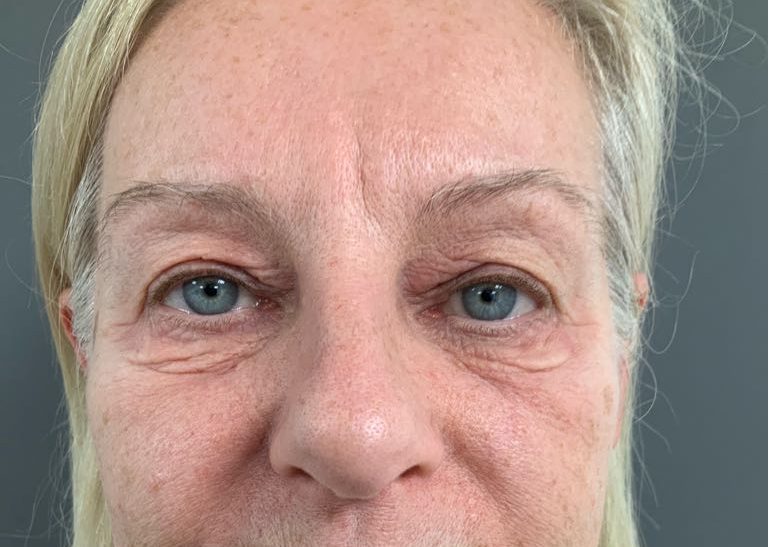
Every plan begins face to face with a doctor or independent nurse prescriber, who goes through your medical history and studies your skin in good light. VISIA skin analysis maps hydration, texture and fine lines in detail. The choice then rests on what your skin is doing rather than on a guess. Our injectors were trained by Dr David Eccleston, or came to MediZen with teaching experience behind them. If a different booster would suit you better, your clinician says so before anything is booked.
Profhilo starts from £385 a session, with two from £720 and three from £1,050. A polynucleotides session starts from £400, with four booked together for £1,440. Julaine is £999 per treatment, or £2,750 for a course of three. All of these appear on our price list. Your own plan and price are confirmed at the consultation, once your clinician has named your kind of tired.
MediZen sits on the Lichfield Road at Mere Green, close to Little Aston, Streetly and Erdington. If the word in the mirror has been tired for a while, come and find out which kind it is. Read about Julaine if the folds are what you notice most, or book a consultation and let us look at all three kinds together.
Your Skin Booster Questions, Answered
Three boosters with three different jobs raise plenty of sensible questions. These are the ones we hear most, and your clinician will cover anything else at your consultation in Mere Green.
It depends on your kind of tired. Profhilo suits dry, flat skin that has lost its glow. Polynucleotides suit thin, crepey skin, especially under the eyes, along with acne scarring. Julaine suits nose to mouth folds that have deepened as collagen declined. A MediZen doctor or nurse prescriber assesses your skin and recommends the one that fits.
Profhilo is hyaluronic acid that floods the skin with moisture and then prompts fresh collagen and elastin over four weeks. Polynucleotides are purified DNA fragments that signal the skin to repair itself. Profhilo often suits younger, drier skin, while polynucleotides are especially suited to thin under-eye skin and to mature, crepey areas.
It sits between the two. Julaine is a collagen activator made from PLLA microspheres, so it adds no instant volume the way a hyaluronic acid filler does. It prompts your own skin to rebuild collagen over months instead. At MediZen it is used to soften the nasolabial folds, with a course of three treatments four to six weeks apart.
At MediZen, Profhilo starts from £385 a session, with two from £720 and three from £1,050. A single polynucleotides session starts from £400, and four together cost £1,440. Julaine is £999 per treatment or £2,750 for a course of three. Your exact plan and price are confirmed at your consultation.
After a loading course, Profhilo typically holds for three to six months, and top-ups every few months keep it there. Polynucleotides last up to a year, with most people topping up every six months. Julaine builds gradually because it restores your own collagen, and your clinician advises when an occasional maintenance session would help.
Polynucleotides are the usual choice for the under-eye area. The skin there is thinner than anywhere else on the face, and polynucleotides improve its quality from within, softening crepey texture and the tired shadow without adding weight. Dr David Eccleston uses them on the under-eye area more than on any other part of the face.
Yes, and many people do, because each works on a different kind of tired. Julaine for the folds pairs well with Profhilo for overall hydration, and polynucleotides under the eyes sit comfortably alongside either. Your clinician spaces the treatments sensibly, so each one can be judged on its own and your skin has time to respond.
Profhilo lifts hydration almost straight away, with the bigger change building over four weeks after each session. Polynucleotides often show a first change after a session or two, and the fuller result around six weeks after the last. Julaine is the most patient, with many people noticing a difference a couple of months in.
Most people describe a brief sting rather than pain. Profhilo goes in through very fine needles at a few mapped points, and polynucleotides as a series of tiny injections just under the surface. Julaine is placed with a fine needle or a cannula. Numbing cream is available for all three, and each appointment is short.
Find the Booster for Your Kind of Tired
Book a skin booster consultation and let a doctor or nurse prescriber read your skin before anything is chosen. Our Mere Green team answers on 0121 308 4373, or you can start the conversation on WhatsApp, and you will leave knowing which booster suits your face.
 Back