

Skin Lesion Removal Birmingham
Most people arrive at MediZen having lived with it a while. Often it is a skin tag that catches on a collar. Sometimes it is tiny white bumps under the eyes, or a rough patch that proves a verruca. Most are harmless, but hard to treat well at home. Our team removes them with advanced electrolysis and vascular laser, matched to the lesion after we examine it.
Skin tags, milia, warts & more
Skin tags, milia, warts, verrucas and blood spots, removed by an experienced, medically led team.
- Treats Skin tags, milia, warts, verrucas
- Approaches Advanced electrolysis, laser
- Sessions Often 1 to 3
- Downtime Minimal
- Suitable for Most skin tones
- Not for Moles (see your GP)


What are skin lesions?
A skin lesion is any area of skin that looks or feels different from the skin around it. It might be a lump, a bump, a spot, a patch or a small growth. Most are benign, meaning harmless, and they are extraordinarily common. By middle age, most of us are carrying at least one of these. That might be a skin tag, a few milia or a stray blood spot, often without giving it much thought. The lesions we treat most at MediZen are exactly this everyday kind. Skin tags, the soft flesh-coloured flaps that form where skin rubs. Milia, the firm white keratin bumps that sit just beneath the surface. Warts and verrucas, raised and rough, caused by a virus. Blood spots and cherry angiomas, the bright red dots that multiply gently with age.
What unites them is that they are cosmetic rather than medical problems, irritating or unsightly rather than dangerous. Just as importantly, they respond well to the right in-clinic removal. That might be advanced electrolysis or the vascular excel V+ laser. What separates them is everything else, which is why we examine before we treat. The single most important step with any lesion is naming it correctly. Get the diagnosis right and removal is usually quick and satisfying. Guess at it, and you risk treating something that should have been checked.

What causes skin lesions?
Treat a lesion without knowing what caused it and you may find it comes back. That is why the first job at your consultation is to work out what you are dealing with. Skin lesions have almost as many causes as they have forms.
Skin tags form through friction, where skin rubs against skin or clothing. So they gather in the folds of the neck, the underarms and the eyelids. They also grow more common with age. Milia are tiny cysts of trapped keratin, the protein that makes up the surface of the skin. They appear when dead cells fail to shed and become sealed under a thin layer. Warts and verrucas are different again, caused by strains of the human papillomavirus that infect the top layer of skin. In turn, they prompt it to thicken. The NHS guidance on warts and verrucas explains how the virus spreads and why they can be so stubborn. Blood spots, the small bright-red cherry angiomas, appear from the thirties onwards. They are simply clusters of tiny dilated blood vessels, harmless and largely down to age and genetics.
Because the cause differs so completely from one lesion to the next, so does the treatment. There is no single removal method that suits them all, and pretending otherwise is how people end up disappointed.

How we treat skin lesions at MediZen
There is no single best way to remove a skin lesion. That is because the right method turns on what the lesion actually is. A skin tag, a virus-driven wart and a vascular blood spot each call for a different approach. Size, number and skin tone all shape the plan your practitioner tailors at consultation.
| Compare | Advanced Electrolysis Skin tags, milia & warts | excel V+ Laser Blood spots & thread veins | Dermatology Diagnosis & medical review |
|---|---|---|---|
 |
 |
|
|
| Skin tags, milia, warts, verrucas | Blood spots, cherry angiomas, thread veins | Diagnosis, mole checks, medical lesions | |
| A fine probe delivers precise heat to lift the lesion away | Vascular laser closes the vessel feeding the lesion | A doctor examines, diagnoses and advises the safest route | |
| 1 to 3 | 1 to 3 | 1 consultation | |
| Minimal, small scabs settle in days | Minimal | None | |
| Most, assessed at consultation | All, with the right settings | All | |
| From consultation | £135 | From consultation | |
| View Advanced Electrolysis | View excel V+ Laser | View Dermatology |
- Skin tags, milia, warts, verrucas
- A fine probe delivers precise heat to lift the lesion away
- 1 to 3
- Minimal, small scabs settle in days
- Most, assessed at consultation
- From consultation
- Blood spots, cherry angiomas, thread veins
- Vascular laser closes the vessel feeding the lesion
- 1 to 3
- Minimal
- All, with the right settings
- £135
- Diagnosis, mole checks, medical lesions
- A doctor examines, diagnoses and advises the safest route
- 1 consultation
- None
- All
- From consultation
Which treatment for your type of skin lesion?
As a guide, here is how we typically match each type of pigmentation to a treatment. Your exact plan is always confirmed at consultation.
+ GP referral




Can you remove skin lesions at home?
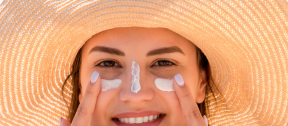
The internet is full of home remedies for skin lesions, and most of them are a bad idea. Skin tags are the usual target, with people tying them off with cotton or reaching for freezing kits. A tag may eventually drop off, but the approach risks bleeding, infection and scarring. It also does nothing for a tag you have misjudged. Milia cannot be squeezed out the way a spot can, because there is no opening to squeeze. So forcing them only inflames the skin and can leave a mark. Warts and verrucas can sometimes be softened with over-the-counter treatments, but they are persistent. Picking at them also spreads the virus to fresh skin. Where a routine does help is prevention, and our team can build a medical-grade skincare plan for congestion-prone skin.
The bigger reason to be cautious is diagnosis. A home kit cannot tell you what a lesion actually is, and that is the part that matters. This is the one honest caveat we always give. A mark that is new, changing, growing, itching, bleeding or simply not something you recognise is different. It is not a job for a kit or a clinic. Instead, you should have your GP or a dermatologist look at it. The NHS advice on moles is a sensible place to start. MediZen does not treat moles for exactly this reason. For the harmless, well-understood lesions, though, a quick in-clinic removal is safer, cleaner and faster. That beats anything you can attempt yourself.

Meet our team of experts
At MediZen we truly believe that the best treatments come down to the best practitioners partnered with the best products. We have selected a dedicated team of professionals who are experts in their fields. They deliver the best treatments in a safe and comfortable environment. Our team has been extensively trained in every treatment they perform.




As featured in




Skin lesion removal FAQs
Still turning something over about skin lesion removal in Birmingham? These are the questions our patients raise most, from skin tags and milia to warts and what is safe to treat. If yours is not here, bring it to a consultation, where we examine the lesion properly and talk you through the honest options.
There is no single answer, because skin lesions are not one thing. Skin tags, milia, warts and verrucas are removed most reliably with advanced electrolysis, which uses a fine probe to lift the lesion away. Blood spots, cherry angiomas and thread veins respond better to the vascular excel V+ laser. We match the method to the lesion at your consultation, once we have looked at it properly.
We treat the common, benign kind: skin tags, milia, warts, verrucas, blood spots, cherry angiomas, thread veins, spider naevi and seborrhoeic keratoses. The one thing we do not remove is moles, which need a medical check first. If you are unsure whether your lesion is something we can help with, book a consultation and we will tell you honestly.
No. MediZen does not remove moles, and we say so plainly. A mole can change over time, and any assessment of one belongs with your GP or a dermatologist, who can check it and arrange removal safely if it is needed. If a mole is new, changing shape or colour, itching or bleeding, please have it looked at without delay.
Most people are surprised by how quick and comfortable it is. Advanced electrolysis feels like a brief, warm pinprick for each lesion, and laser feels like a fast flick of heat. Both are over in minutes for a small area. Larger or more sensitive treatments can be made more comfortable, and your practitioner talks you through it before starting.
A very fine probe delivers a tiny, controlled amount of heat to the base of the lesion, which lifts a skin tag away or releases the trapped keratin inside a milium. There is no cutting and no stitches. A small scab may form and settle over a few days. You can read more on our advanced electrolysis page.
Yes, and it is far safer than trying at home. Milia have no opening to squeeze, so forcing them only inflames the skin. We release each one with a fine electrolysis probe. If you are prone to them, our team can prescribe medical-grade skincare, and a course of chemical peels can reduce how often they return.
Warts and verrucas are caused by a virus, which is what makes them stubborn. Advanced electrolysis targets the infected tissue directly so the body can clear it. Some warts need more than one visit, and we will be upfront about that. Because the virus spreads, treating them promptly and resisting the urge to pick helps stop new ones appearing.
With proper technique, scarring is uncommon. The treated spot usually forms a small scab that falls away on its own, leaving skin that settles back to normal over the following weeks. Following the simple aftercare we give you, and keeping the area protected from the sun, gives the cleanest result.
Many lesions are dealt with in a single visit, and most clear within one to three sessions. Warts and larger or more numerous lesions can take a little longer. You will get a realistic number at your consultation rather than a guess over the phone.
It depends on the lesion. A skin tag or a milium that has been removed is gone for good, though new ones can form elsewhere over time. Warts are caused by a virus, so they can occasionally return or crop up nearby. Blood spots do not come back once treated, though the tendency to form them can continue with age.
It can be, with the right method and a careful hand. Advanced electrolysis suits most skin tones, and where we use laser we choose the settings carefully and carry out a patch test first. Your practitioner assesses your skin at the consultation and recommends the safest approach for you.
Because treatment depends entirely on the lesion, its size and how many you have, we price it once we have seen it. Many removals are quick and affordable, and we give you a clear quote at your consultation. Our full price list has the detail on individual treatments.
A skin tag is a soft, smooth flap of ordinary skin that forms through friction, usually hanging on a tiny stalk. A wart is rough, firm and caused by a virus, and it tends to sit flush against or slightly raised from the skin. They can look similar to the untrained eye, which is one more reason we examine before we treat.
For anything you are unsure about, yes. Removing a lesion cosmetically is only sensible once you know it is harmless. If a spot is new, changing, growing, itching or bleeding, have it assessed first. The British Association of Dermatologists has clear patient guidance on when a skin lesion needs a professional opinion.
Yes. MediZen is in Mere Green, Sutton Coldfield, a short drive from central Birmingham, and we look after patients from across the city and the wider Midlands for skin tags, milia, warts, verrucas and blood spots.
Yes. Every removal starts with a consultation so we can examine the lesion, confirm what it is and choose the safest method, including a patch test where laser is involved. It is also the moment to ask anything you are wondering and to hear an honest view of what to expect.

Why MediZen

As one of the UK’s leading medical aesthetic clinical trial and training centres, and one of only a handful of cosmetic clinics registered with the Government’s Care Quality Commission, you can be confident that our focus is your needs and that quality, training, safety and pain management are paramount in everything that we offer.
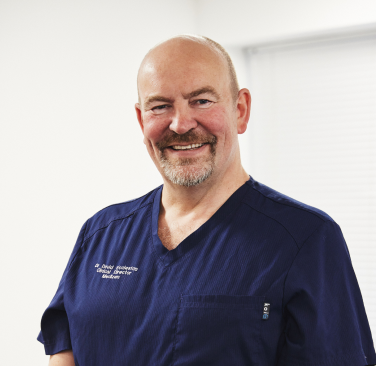
We have been using injectables here at MediZen for over 20 years. MediZen’s clinical director, Dr David Eccleston, was one of the first doctors in the UK to offer injectables and is therefore extremely experienced in the use of all injectable treatments, leading to him being named by Tatler as the ‘Man in the Midlands for Injectables’.
All of our injectors have been trained personally by Dr Eccleston, so no matter who you see, you can rest assured they have the skills and knowledge required to give you subtle, natural-looking results in the safest of environments.
 Back
Back